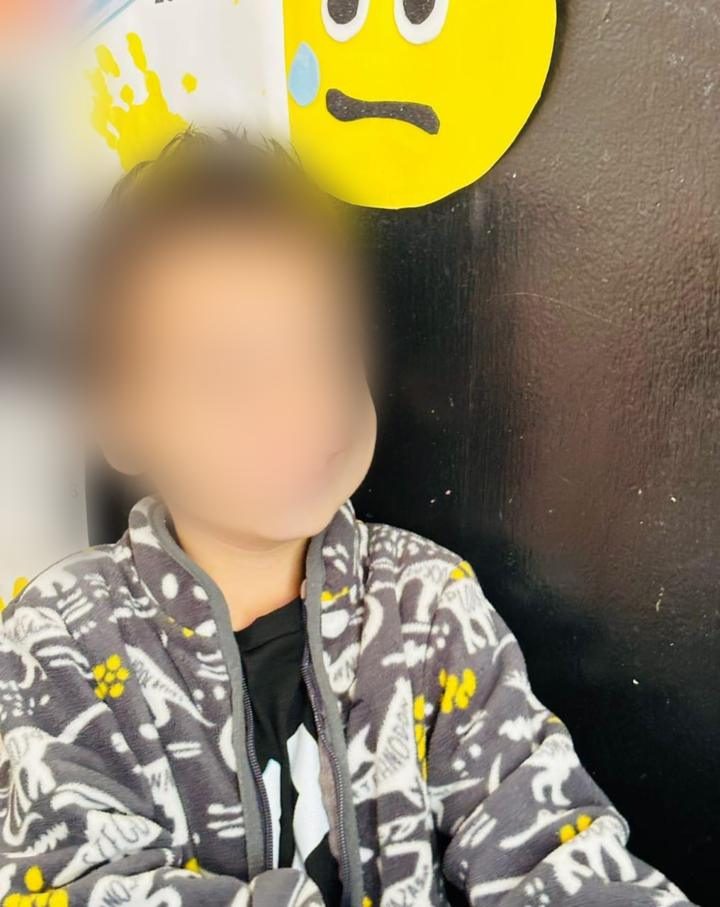
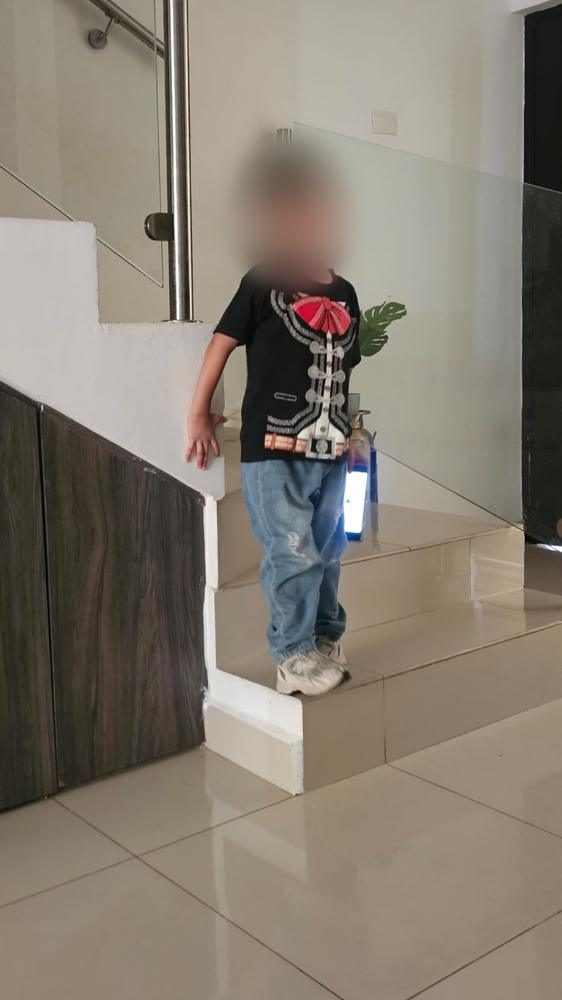

We wished for him for years
When he finally came home, at about three months old, Matti was a baby who searched for us with his eyes, smiled at us and played with his toys. He ate everything. He started saying his first words: water, daddy, mommy.
Something changed
Around one year and two months, little by little he stopped looking at us, stopped turning when we spoke to him, stopped saying the words he already said. Later his neurologist would give it a name: regression. All we knew was that our son was drifting away and we didn’t understand why.
We had no family or friends nearby, and no other children for him to play with. We thought that was what he was missing, and we enrolled him in a preschool. We explained why. In less than two months, the school confirmed they had noticed something. They recommended a child psychologist who was a blessing: she saw us many times and even went to observe him at school.
The diagnosis
We were told we had to wait until he turned three to get a diagnosis. Until then we knew absolutely nothing about autism.
And the result hit us like a bucket of cold water.
Level 3 autism, the kind that requires very substantial support. The boy we had wished for so much might need support for the rest of his life.
Closed doors
Then our parade through schools began. They charge you for everything up to graduation and, a week later, you realize they aren’t prepared to care for your child. It happened to us even at places that called themselves specialized.
Until we found a small place where, together with his shadow teacher, they gave him excellent guidance. We saw steps that for any other child would be small, but for us were giant.
Then life took a turn and we had to move to another city. Everything started over. “Of course, we have a spot”… until we said “he’s autistic”. Then the answer changed: “the spots ran out yesterday”, “we don’t have room anymore”, and endless excuses.
The specialists
At an institution that called itself specialized, they sent us, without giving us a choice, to a neurologist. Without examining him, barely looking at him, he told us very condescendingly that, besides autism, Matti had a developmental delay and needed a series of tests, all of them invasive.
We asked him a very simple question: “And what are these tests for?”. Just as condescendingly, he answered: “To find out where the autism comes from”. “And does that help his treatment?”. He couldn’t tell us anything more.
We decided not to do any of them. If they weren’t going to help him, we didn’t want to put him through invasive tests just to know the cause.
More than three years went by before we found another neurologist who, with all the patience in the world, explained the why and the how of everything.
He even guided us with his medication, which we had refused because no one had given us the information we needed.
And it still happens today. Recently, some tests showed something in his ears and we were referred to a specialist. We took time off work, drove him through traffic, knowing how hard it is for him to be shut in the car for a long time, and paid more than 200 pesos just for parking. The doctor arrived 45 minutes late. By then Matti couldn’t take any more, and he wasn’t going to let anyone examine him. When we said we were leaving, they just told us the doctor was “going to wash up” and would see us in 20 minutes.
For a child like Matti, a 45-minute wait isn’t an inconvenience: it’s impossible.
Small giant steps
Until, once again, we found a place that helps us take small steps every day, supported by therapies, tests, his neurologist, his ENT doctor and his treatment.
Food
Before his regression, Matti ate everything. Today, if he tries a piece of candy, for us it’s huge progress. Some people tell us “don’t let him eat pizza”. We know it isn’t the healthiest, but he tried something new, and that fills us with joy.
Because maybe tomorrow he won’t try it again, as has already happened to us.
What we’ve learned about food →
Matti today
Today Matti doesn’t talk. He still wears diapers. He eats very few foods, although thank God he has a good weight and is growing well. He has a lazy bowel. We keep taking small steps, every day.
There are things you can’t see from the outside. We haven’t been able to go out to eat at a restaurant for four years, because it’s impossible. The movies? Ha… not even as a joke. And leaving him with his grandparents or a relative to look after him… that’s a dream.
That’s why sometimes we don’t go to parties or get-togethers. The lights, the noise and so many people overwhelm him; other children move the bottles he lined up so carefully. And when we have to choose between a party and a therapy session, the answer is more than obvious.
Appointments for support services or specialists, even private and expensive ones, take months. And as of today, we don’t have and haven’t had any support.
But there’s something we want to say loud and clear, for the whole world to hear:
Matti is a very happy boy! 💙
And he also has very hard moments. In some meltdowns he has broken our nose and left scratch marks on our faces. He doesn’t do it on purpose: in that moment he can’t take any more. We share it because many families live through this in silence and with guilt, and it shouldn’t be that way. When meltdowns hurt →
Why we made Mi Voz
First, so Matti could tell us “I want water”: the same word he once said and then lost. Now, so that no family has to start this path alone, without guidance, or paying for what should belong to everyone.
The Leal Carbellido family 💙